Energy Theatre
Progressing to Net-Zero Through Carbon Capture & Energy Storage
10 Sep (Thur) Day 1 : 11:55 – 12:45
As organisations accelerate decarbonisation strategies, carbon capture and energy storage are emerging as critical enablers in the transition to net-zero. From hard-to-abate sectors to grid stability challenges, these technologies offer scalable pathways to reduce emissions while maintaining operational resilience.
This panel brings together industry leaders, technology providers, and policy experts to explore the latest developments in carbon capture, utilisation and storage (CCUS), alongside advances in energy storage solutions. Discussion will focus on real-world applications, investment and infrastructure requirements, and the role these technologies play within Hong Kong and the wider Asia-Pacific region’s net-zero roadmap. Attendees will gain insights into the opportunities, limitations, and collaborative actions needed to accelerate deployment at scale.
Speakers

Dr. Xiao Liao
Co-Founder & VP
Decarbon Tech
Dr. Xiao Liao
Decarbon Tech
Co-Founder & VP
As Co-Founder and VP at DeCarbon Tech, I focus on leveraging my expertise in innovation management, technology management, and organizational consulting to drive impactful solutions in carbon removal. DeCarbon Tech produces high-value carbon products through DAC technology.
Previously, I served as Deputy General Manager at China Resources Intellectual Property Management Co., Ltd., where I supported strategic business models and oversaw operations in Hong Kong, contributing to significant revenue generation. My career includes extensive experience in technology transfer, university-industry collaborations, and innovation initiatives, solidifying my commitment to advancing technological and environmental progress.
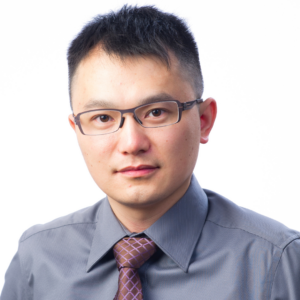
Prof. Jin Shang
Professor
School of Energy and Environment – City University of Hong Kong
Prof. Jin Shang
School of Energy and Environment – City University of Hong Kong
Professor
Prof. Jin Shang is a Professor in the School of Energy and Environment at City University of Hong Kong, where he leads the Adsorption Separation Laboratory. He earned his PhD in Chemical Engineering from the University of Melbourne and subsequently undertook postdoctoral research at the Cooperative Research Centre for Greenhouse Gas Technologies (CO2CRC), the University of Melbourne, and the Georgia Institute of Technology. His research advances adsorption-based gas separation for carbon capture and removal, natural gas purification, air separation, and toxic gas abatement. He discovered the molecular trapdoor mechanism, now recognized as the fourth major adsorption-based separation mechanism, which enables non-size-based molecular sieving. His honors include the 2024 Carbon Capture Award for Excellent Research and the 2022 ISTP-Bogen Young Scientist Award. He has published more than 150 papers, received over 9,900 citations, achieved an h-index of 57, and has been listed among Stanford’s top 2% most-cited scientists.
My Sustainability Goals for 2026:
1. Accelerate real-world deployment of carbon-management technologies.
I hope Hong Kong will establish more large-scale demonstration projects that move carbon capture, utilisation and removal technologies beyond the laboratory, particularly in buildings, data centres, transport infrastructure and other hard-to-abate sectors.
2. Promote integrated, energy-efficient net-zero solutions.
Hong Kong should better connect carbon capture with renewable energy, energy storage, waste-heat recovery and advanced cooling systems, enabling emissions reduction without imposing excessive energy or economic costs.
3. Strengthen Hong Kong’s climate-technology ecosystem.
I hope to see closer collaboration among universities, government, industry and investors, supported by shared pilot facilities, innovation-friendly procurement and funding mechanisms that help locally developed technologies progress from research to commercial implementation.